Table of Contents
Quick Take
Hardwood Flooring—wondering what the cost of hardwood floors looks like today? Installed hardwood flooring at AFS generally runs $11.50–$33.00+ per square foot depending on species, construction (solid vs. engineered), finish, installation method, and site prep. For a typical 500-SF project, totals often land between $5,750 and $16,500+.
Why Prices Vary (and why online ranges disagree)
Search “hardwood cost” and you’ll see everything from $5 to $25/SF — many of those are materials only or “free install” ads that add prep later. We publish installed ranges because real projects include more than planks: preparation, trims, transitions, and the right installation method for your subfloor.
Design Trends (and how they nudge price)
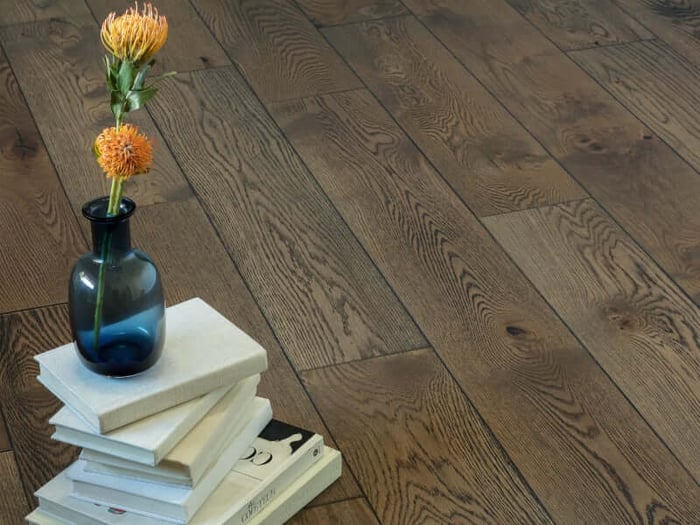
2025 continues to favor wide-plank white oak in low-sheen, wire-brushed finishes. That look costs more to produce (wider/longer boards, textured finishing) but delivers an expansive, modern feel and hides everyday scuffs. Cool grays still exist, but warm naturals lead — typically with matte urethane or aluminum-oxide topcoats.
Anecdote: A customer replaced mid-1970's red oak with 7½" white oak, wire-brushed. “The rooms instantly felt bigger — and we don’t stress about minor scratches anymore.”
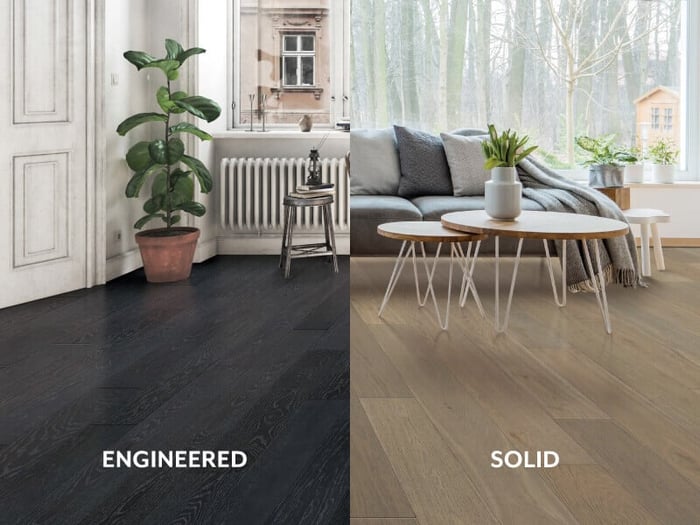
Engineered vs. Solid Hardwood
- Solid hardwood is milled from a single piece of wood — ¾" is most common. It can be sanded/refinished multiple times, which is why it wins on ultimate lifespan. It prefers above-grade wood subfloors and controlled humidity.
- Engineered hard wood is real-wood veneer over a stable core. Wear-layer thickness controls refinish potential; thicker, sawn faces can be refinished and approach solid’s longevity. Engineered shines over concrete/basements and in wider boards thanks to better dimensional stability.
Installer Tip: Over concrete, a full glue-down engineered install not only improves stability — it significantly reduces sound versus floating methods.
Installed Cost
To keep things simple and comparable, here’s a single 500-SF project baseline.
Type | Good | Better | Best |
Engineered Hardwood (500 SF installed) | $5,750–$7,500 | $7,500–$10,000 | $10,000–$15,000+ |
Solid Hardwood (500 SF installed) | $6,250–$8,250 | $8,250–$11,500 | $11,500–$16,500+ |
What “installed” includes at America’s Floor Source: professional installation, standard underlay, minor floor prep, normal furniture moving, coordinating transitions, new shoe/quarter round, required sealants/caulk, delivery for acclimation, and glue-assist on engineered planks 5" and wider.
Heads-up on markets: Hardwood is a commodity. Species availability and freight can nudge pricing up or down during the year.
Biggest Cost Drivers (you’ll actually notice)
Product-Related Costs
- Species: Oak/hickory/maple = mid; exotics tend higher. Want the look without the price? Stained oak can mimic many hues.
- Width & length: Wider or longer boards create a more upscale look but increase material waste and total cost.
- Construction: Solid hardwood often prices higher, while premium engineered floors (with thicker cores and wear layers) can rival solid in cost.
- Wear layer (engineered): Thin = lower entry price; thick = refinishable and longer life.
- Finish/texture: Matte and wire-brushed finishes add factory steps (and cost), but they also hide everyday wear better.
- Water-tolerant tech: Lines like Hydropel offer enhanced dent, scratch, and moisture resistance — typically at a premium.
Project-Related Costs
- Room layout: Open, rectangular rooms install faster; tight hallways and bedrooms add labor.
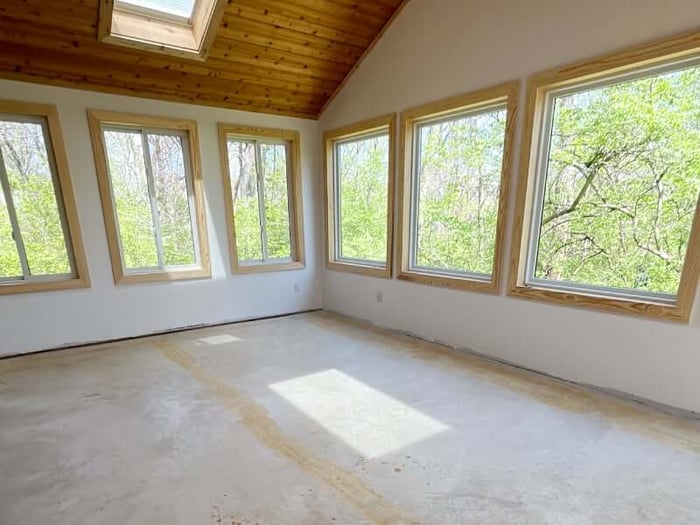
- Subfloor & moisture: Flat, dry, and sound saves money. Dips/humps or elevated moisture require prep and/or moisture barrier on slabs.
- Installation Method: Nail/staple over wood is straightforward; glue-down over concrete adds materials/time — and delivers that quieter, more solid feel.
- Stairs & transitions: Custom treads, stair noses, reducers, and specialty vents add craftsmanship and time.
Demo & Prep
Typical tear-out (500 SF):
- Carpet: ~$100–$350+
- LVP/Laminate: ~$750–$1,375+
- Sheet vinyl: ~$1,125–$1,375+
- Hardwood: ~$1,875–$2,500+
- Tile: ~$3,000–$4,000+ (tile demo is loud, dusty, and labor-intensive — hence the top end)
Engineered glue-down may also require adhesive (~$500–$1,000 per 500 SF) and, in select builds, underlayment/overlay ($750–$1,000 per 500 SF) to meet sound/flatness specs.
Which Option Truly Lasts Longer?
- Solid hardwood: Commonly 30–50+ years with refinishing every 7–10years; many vintage floors exceed a century.
- Engineered hardwood: Depends on wear layer; thick sawn faces can be refinished and deliver 20–30+ years. Either way, the care routine (humidity 30–50%, felt pads, rugs, hardwood-safe cleaners) is what turns a 15-year floor into a 30-year floor.
Before You Install — Final Thoughts
Hardwood flooring changes how your home looks, sounds, and feels. Whether you choose engineered for flexibility or solid for maximum refinish life, getting the right install method and prep (and, over concrete, considering glue-down for sound quality) is what protects your investment.
Next Steps
Schedule a free consultation to have our team inspect your subfloor.
Visit a showroom to learn how prep protects your new flooring.
FAQs
Is engineered really cheaper than solid?
Often at entry levels, yes. Premium engineered with thicker cores and wear layers can equal or exceed solid pricing — but you gain stability (and sometimes placement over concrete).
Kitchen vs. living room — why does the same SF cost more?
Kitchens need toe-kick cuts, appliance clearances, more transitions, and sometimes glue-down over slab — all of which add time and materials.
Is refinishing cheaper than replacing?
If there’s refinishable thickness left, yes. Replace when thickness is gone, water damage is extensive, or you want a different width/species/layout. If there’s refinishable thickness left, yes.
Does “waterproof hardwood” exist?
Not in the absolute sense. Newer lines are highly water-resistant. Not in the absolute sense.