Table of Contents
Quick Take
Tile vs luxury vinyl plank (LVP), both deliver style and durability for kitchens, baths, and high-traffic areas. Vinyl usually costs less and feels warmer; tile lasts longer and boosts resale value. The right choice depends on how you live, how much you want to invest now, and how long you plan to stay.
Disclaimer: All pricing reflects typical 500-SF installed projects. Every home is unique—layout, preparation, and product choices can affect totals.
Why Homeowners Compare Tile vs. Luxury Vinyl
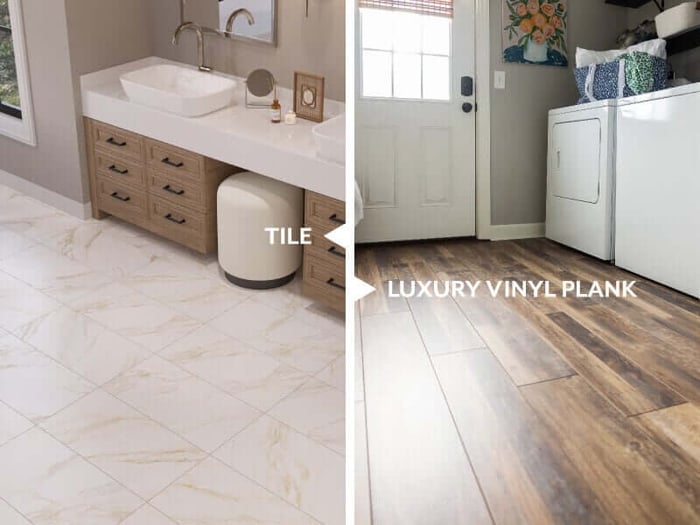
Choosing between tile vs. luxury vinyl plank often comes down to lifestyle. Both can handle moisture, pets, and spills, and both now come in designs that mimic wood, stone, or marble so realistically that most guests can’t tell the difference.
After twenty years helping homeowners choose flooring, I’ve found this decision usually isn’t about which is “better.” It’s about what kind of comfort, upkeep, and investment make sense for you.
Both materials are among the best flooring for kitchens and other moisture-prone spaces, which is why many homeowners start by comparing tile vs LVP cost before deciding.
Tile vs. Luxury Vinyl: Quick Pros and Cons
Feature | Tile (Porcelain / Ceramic) | Luxury Vinyl Plank (LVP) |
Lifespan | 25 – 30+ years | 15 – 25 years |
Comfort | Cool & hard underfoot | Softer & warmer feel |
Radiant Heating Available | Yes | No |
Water Resistance | Waterproof with grout seal | Fully waterproof surface |
Scratch / Dent Resistance | Excellent | Very good but softer core |
Maintenance | Grout may need cleaning / seal | Simple sweep and mop |
Repairability | Replace tile by pro | Easier with glue-down LVP; floating systems need panel removal |
Cost to Install | Higher labor & prep | Lower labor & faster install |
Durability & Everyday Life
Tile: Built to Last
Tile stands up to decades of traffic, heat, and water. It’s the go-to for kitchens, baths, and entryways where you expect splashes or muddy shoes. Pair it with radiant heat for cozy comfort in colder months.
Vinyl: Flexible and Family-Friendly
Luxury Vinyl Plank thrives in busy households. It’s waterproof from top to bottom and resists most dents. Floating systems are simple to install, though replacing a single plank often means unlocking several others. Glue-down options make spot repairs easier.
Real-World Tip: Keep one or two extra boxes of your flooring for future touch-ups—patterns evolve and can be hard to match later.
Maintenance & Protection
Both surfaces clean easily, but their upkeep style differs.
- Luxury Vinyl Plank: Just sweep and mop—no sealing or special products. Avoid harsh solvents and use felt pads under heavy furniture to prevent dents.
- Tile: Simple to maintain daily, though grout may need occasional scrubbing or resealing. New epoxy and urethane grouts stay brighter longer and never need sealing.
Added Protection: Many homeowners add our Centricity Accident Protection Plan for coverage against chips, scratches, or stains—especially helpful in kitchens and baths.
Style & Comfort
Tile offers almost limitless creativity: marble-look slabs, geometric mosaics, natural stone textures, and matte concretes. Large-format tiles create a seamless, modern vibe; smaller mosaics bring charm to powder rooms and showers.
Vinyl delivers approachable luxury. Its high-definition imaging and textured finishes mimic hardwood or stone at a fraction of the cost, while providing a softer, quieter surface that’s easier on joints and pets.
Follow our Instagram page for more inspiration
Installation & Cost
Flooring Type | Tier | Price per SF | 500 SF Installed Range | Estimated Monthly Example* |
Luxury Vinyl Plank
| Good | $8.00 – $9.50 | $4,000 – $4,750 | $50 – $65 / mo |
Better | $9.50 – $12.00 | $4,750 – $6,000 | $65 – $80 / mo | |
Best | $12.00 – $15.00 | $6,000 – $7,500 | $80 – $100 / mo | |
Tile (Ceramic / Porcelain)
| Good | $13.00 – $16.50 | $6,500 – $8,250 | $85 – $110 / mo |
Better | $16.50 – $22.00 | $8,250 – $11,000 | $110 – $145 / mo | |
Best | $22.00 – $33.00 | $11,000 – $16,500 | $145 – $215 / mo |
*Estimated using long-term financing for comparison only; actual payments vary.
Vinyl’s faster, floating installation cuts labor hours and allows projects to finish in days instead of weeks. Tile’s installation takes more time for leveling, mortar, and grout, but once it’s down, it’s nearly bulletproof.
Value Over Time
Think beyond day-one cost.
Tile is the definition of “buy it once.” It can outlast several remodels, and its permanence adds confidence to resale.
Vinyl Plank gives you the fastest return on investment if you plan to move or remodel within 10 years—it’s affordable, attractive, and easy to replace when trends change.
Many homeowners install tile in wet zones (kitchen and bathrooms) and vinyl in adjoining spaces for a seamless look that balances both comfort and longevity.
Visit one of our showrooms or contact us today for expert remodeling advice and a wide selection of both hardwood and luxury vinyl plank flooring options. Let us help you find the perfect flooring solution for your home!
FAQs
What is the downside to vinyl flooring?
Vinyl can dent under heavy furniture, fade with prolonged sunlight, and can’t be refinished. Floating floors may require partial disassembly to replace a damaged plank.
Can tile crack easily?
Only if the subfloor isn’t properly prepared. With a level base and professional installation, cracking is rare.
Is tile or vinyl better for pets?
Both perform well—vinyl is quieter and softer; tile resists scratches and odors.
Is tile or vinyl cheaper in the long run?
Vinyl saves money upfront. Tile’s longevity makes its yearly cost lower for long-term homeowners.
Can tile be used with radiant heat?
Absolutely. Tile is one of the best conductors for radiant systems, warming the room efficiently while protecting the heating elements.
Can vinyl go in bathrooms?
Yes—luxury vinyl plank and tile are waterproof when seams are sealed properly. Just avoid prolonged standing water around edges.