Table of Contents
- Quick Take
- What’s the Difference Between Engineered and Solid Hardwood?
- Durability and Refinishing Potential
- Moisture and Climate Suitability
- Installation and Subfloor Compatibility
- Maintenance and Everyday Life
- Cost and Long-Term Value
- Design and Style Trends
- Closing Thoughts
- Ready to Take the Next Step?
- FAQs
Quick Take
Solid hardwood is the classic, all-wood floor homeowners dream about — it can be refinished for decades of life. Engineered hardwood is real wood too, but designed with a layered structure that resists movement from moisture and temperature changes. Both are beautiful and durable, but the right choice depends on where you’re installing, how your family lives, and how long you plan to stay in your home.
What’s the Difference Between Engineered and Solid Hardwood?
Most people walk into a showroom and hear, “engineered” and “solid hardwood,” and wonder if one is fake. It’s not — both are 100% real wood. The difference is in what’s underneath the surface.
Solid hardwood is the original form of wood flooring. Each board is milled from a single piece of wood, giving it that traditional, continuous-grain feel you can sand and refinish multiple times. When people picture old homes with wood floors that have lasted a century, this is what they’re thinking of.
Engineered hardwood takes that same surface layer of real wood — oak, maple, hickory, walnut — and bonds it to several layers of plywood or high-density fiber core. Think of it like a perfectly built sandwich: the layers below the veneer keep the plank stable when humidity rises and falls.
That’s why engineered hardwood can go places solid wood can’t — like basements, condos, or homes with radiant heat and concrete slabs.
Quick Look Comparison
Feature | Engineered Hardwood | Solid Hardwood |
Construction | Real wood veneer + plywood layers | One solid piece of wood |
Refinishing | 0–3 times (depends on veneer thickness) | 3–5 times |
Moisture Performance | Better moisture tolerance; not waterproof | Low tolerance |
Installation Methods | Float, Glue, or Nail | Nail only |
Best Locations | Basements, condos, slabs | Main & upper levels |
Lifespan | 20–40 years | 40–100 years |
Durability and Refinishing Potential
If you’re thinking long-term, both types hold up beautifully — but in different ways.
Solid hardwood’s durability comes from its thickness. It can be sanded and refinished multiple times over decades, which means even after scratches, scuffs, or a change in décor, the floor can look brand new again. It’s why you still see oak floors in older homes that date back to the 1940s.
Engineered hardwood, meanwhile, relies on a different kind of strength — stability. It doesn’t move or warp when humidity changes, which means fewer gaps, squeaks, or seasonal cupping. Higher-end versions have a thick top veneer (3–6 mm) that can handle one or two professional refinishings. Its factory-cured finish is extremely tough against daily wear, so many homeowners never need to refinish it at all.
If your home sees pets, kids, or frequent entertaining, engineered hardwood can be the easier choice — less upkeep, less worry.
Moisture and Climate Suitability
Here’s where the two start to truly separate.
Solid hardwood is sensitive to moisture. In humid regions or homes with fluctuating indoor temperatures, it naturally expands and contracts. That’s normal wood behavior, but it can lead to slight gaps or squeaks over time if humidity isn’t controlled.
Engineered hardwood solves that issue with its layered structure. The cross-laminated core minimizes movement, so it performs better in basements, over concrete, or in climates with dramatic seasonal changes (hello, Midwest). It’s not waterproof — but it’s less reactive, which makes a big difference in the long run.
If you’ve ever had flooring buckle near a patio door or noticed gaps between boards in winter, that’s exactly what engineered flooring is designed to prevent.
Installation and Subfloor Compatibility
Another key difference is how these solid hardwood floors are installed.
Solid hardwood must be nailed or stapled into a wood subfloor, which limits where it can go and often adds more prep time. It also needs time to acclimate to the home’s humidity before installation — usually a few days.
Engineered hardwood, on the other hand, offers flexibility. It can be floated, glued, or nailed down, depending on your space. Floating floors are especially popular in condos and remodels where sound control or existing concrete is a factor.
At America’s Floor Source, our installation teams test every subfloor for moisture and flatness before laying a single plank. Proper prep and acclimation are what make wood floors last, no matter which type you choose.
Maintenance and Everyday Life
Both engineered and solid hardwood are long-lasting — but keeping them that way means building a few habits into your routine.
- Clean gently, not wet: Use a hardwood-safe cleaner or lightly damp microfiber mop. Never soak the floor.
- Protect from dents: Use felt pads under furniture and rugs in high-traffic areas.
- Watch the humidity: Run a humidifier in winter or dehumidifier in summer to keep levels around 40–50%.
Solid hardwood’s advantage is that you can sand out damage. Engineered hardwood’s advantage is that you’re less likely to see that damage in the first place. Its multi-layered design and tough surface coatings resist scratches and dents remarkably well.
Homeowners with dogs or kids often lean toward engineered because it stays looking newer longer, even under heavy use.
Cost and Long-Term Value
There’s no wrong choice — just a different kind of investment.
Solid hardwood tends to cost more upfront because it’s thicker, heavier, and takes longer to install. But it’s also a “forever” floor. With proper care, you’ll likely never have to replace it.
Engineered hardwood usually costs a bit less to install because it can go directly over concrete or existing subfloors with minimal prep. It offers decades of beauty and a great balance of performance and price.
If you’re staying in your home long-term or renovating a forever space like a main living room, solid hardwood might make sense. If you’re updating a finished basement, condo, or family home with kids and pets, engineered gives you nearly the same look and feel — with less worry about climate or maintenance.
For detailed pricing, use our Flooring Cost Calculator to estimate your project total.
Design and Style Trends
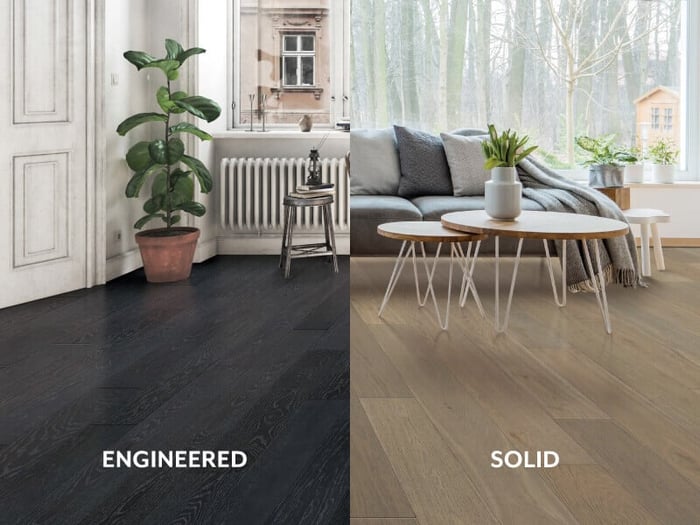
One of the biggest misconceptions is that engineered floors look different than hardwood floors— they don’t.
Both solid and engineered hardwood share the same real-wood surface and finish options. The difference is on the inside, not what you see or feel underfoot.
Today’s trends lean toward wide-plank European oaks, light natural tones, and low-sheen matte finishes. These styles create a relaxed, modern feel that makes rooms look more open and connected. Engineered hardwood can go even wider — up to 9 or 10 inches — without warping, allowing those big-plank designs designers love.
If you prefer traditional character, solid hardwood still offers that deep-grain warmth and the option for site-applied stains and finishes — custom looks that evolve with your space.
When you visit an AFS showroom, you can see both side by side, touch the surface, and notice how each reacts under real light — something no screen can replicate.
Closing Thoughts
Solid hardwood floors aren’t just about durability — they’re about the feeling they bring to a home. Solid hardwood connects you to generations of craftsmanship and character. Engineered hardwood captures that same beauty in a form that works for modern living.
Whichever you choose, the experts at America’s Floor Source can help you match the perfect product to your space, your climate, and your lifestyle — so you can enjoy your floors for decades to come.
Ready to Take the Next Step?
• Schedule a Showroom Visit – See and feel our most popular carpet styles in person. Our design specialists will help you compare textures, colors, and comfort levels under real light.
• Use Our Carpet Pricing Calculator – Explore how different carpet styles and room sizes fit your project budget before you visit.
• Book an In-Home Consultation – Prefer to shop from home? We’ll bring samples to you, review your rooms, and help you choose the perfect carpet for your living room or bedroom.
FAQs
Is engineered hardwood real wood?
Yes — it has a genuine hardwood top layer. The difference is in the backing layers that improve stability.
Can engineered hardwood be refinished?
Yes, if the veneer is thick enough (typically 3 mm or more). Ask your AFS flooring expert to confirm.
Which lasts longer?
Solid hardwood can last 40–100 years with refinishing. Engineered typically lasts 20–40 years but holds up better against moisture swings.
Which is better for basements or condos?
Engineered hardwood, thanks to its moisture tolerance and installation flexibility.
Does solid hardwood add more resale value?
Both add value, but well-maintained condition and color trend matter more to buyers than construction type.
How do I maintain my hardwood floors?
Sweep weekly, clean with hardwood-safe products, control humidity, and address spills quickly.