Table of Contents
You’ve decided to build a home gym—a fantastic investment in your health and wellness. You’ve got the weights, the cardio machine, and the motivation. But before you get started, there's a crucial piece of the puzzle you can’t overlook: the floor.
The right flooring can protect both your body and your expensive equipment. That’s where rubber flooring for home gyms comes in. But with so many options available, a common question arises: how thick of rubber flooring for home gym do I need?
Why Rubber Flooring is the Best Choice for Your Home Gym
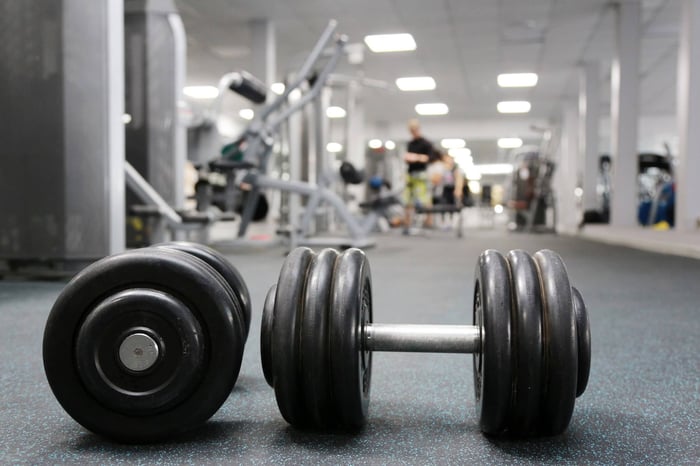
Rubber flooring is not just a good option; it’s the gold standard for home gyms, commercial gyms, and athletic facilities of all kinds.
Its unique properties make it ideal for handling heavy weights, high-impact movements, and the general wear and tear of a workout.
The Benefits of Rubber Flooring for a Home Gym
Before we get to the question of thickness, let's quickly review why rubber flooring for home gym is the superior choice:
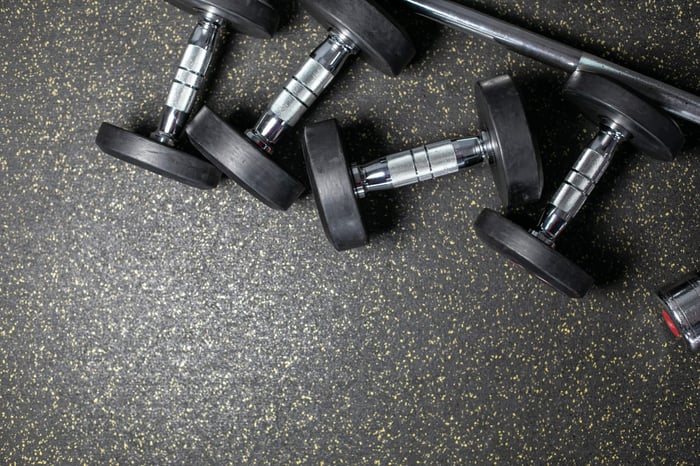
- Impact Absorption: This is the biggest benefit. Rubber absorbs the shock from dropped weights, protecting your subfloor (whether it's concrete, tile, or wood) and reducing the chance of your equipment breaking.
- Joint Protection: The cushioned surface of rubber flooring is easier on your joints, reducing the strain on your knees, ankles, and back during high-impact exercises like jumping and running.
- Durability: Rubber is incredibly tough and resilient. It can withstand the weight of heavy equipment and the constant friction of foot traffic without tearing, scuffing, or indenting.
- Traction: The surface of rubber flooring provides excellent grip, preventing slips and falls during your workout, even when it gets sweaty.
- Easy to Clean: Spills, sweat, and dirt can be easily wiped away with a damp mop, making cleanup a breeze.
- Noise Reduction: Rubber helps to dampen noise, which is a great benefit if your home gym is on an upper floor or near a living area.
What Thickness Rubber Flooring for Home Gym: The Breakdown
Choosing the right thickness is the most important decision you'll make when selecting rubber flooring for home gym. It directly relates to the types of workouts you'll be doing.
1/4 inch (6mm)
- Best For: Light cardio, bodyweight exercises, yoga, and stretching.
- Why: This thickness is great for general-purpose use. It provides a comfortable, anti-slip surface for exercises where you are not dropping weights. It will protect your subfloor from scuffs and scratches from exercise machines but won't offer much protection from dropped weights.
3/8 inch (9.5mm)
- Best For: General fitness, light-to-moderate free weight training, and cardio.
- Why: This is the most popular choice for home gyms. The 3/8-inch thickness provides a perfect balance between comfort, impact absorption, and affordability. It can handle moderately heavy free weights being placed down (not dropped from a significant height) and provides excellent protection for your subfloor. If you’re not a powerlifter but want to use free weights, this is the ideal thickness.
1/2 inch (12.7mm)
- Best For: Serious weightlifting, powerlifting, and high-impact exercises.
- Why: If you plan on doing deadlifts, squats, or any exercise where you might drop heavy weights, a 1/2-inch thickness is a smart investment. It offers superior shock absorption, protecting your floor and equipment from significant impact. This is the minimum thickness recommended for any kind of heavy weight drop.
3/4 inch (19mm) or 1 inch (25.4mm)
- Best For: Professional-grade weightlifting, Olympic lifting, and very heavy free weight drops.
- Why: This level of thickness is what you’ll find in professional gyms and training facilities. It’s designed to handle the most extreme conditions, providing maximum protection for both the subfloor and the athlete. While it may be overkill for most home gyms, it's the right choice if you are a serious powerlifter and want to be able to drop very heavy barbells without any hesitation.
Rubber Home Gym Flooring Installation and Maintenance
Once you’ve decided on what thickness rubber flooring for home gym you need, you’ll also need to consider installation. Rubber flooring for home gyms comes in two main types:
- Interlocking Tiles: These are the easiest to install. The tiles fit together like puzzle pieces, requiring no adhesive and making it simple to lay the floor yourself.
- Rolled Rubber: This comes in large rolls. While it can be more challenging to install, it creates a more seamless look with fewer seams. It's often held in place by its own weight but can be glued down for a permanent installation.
Learn More About Our Rubber Flooring Options Today!
Choosing the right rubber flooring for home gym is a critical step in creating a safe and effective workout space. By understanding the different thicknesses and their purposes, you can make an informed decision that protects your investment, your home, and your body.
Call or Visit America's Floor Source. We have showroom locations in Louisville, KY, Lexington, KY, Memphis, TN, Lewis Center, OH, Columbus, OH, and Indianapolis, IN. We service Ohio, Tennessee, Kentucky, and Indiana as well as offer shop at home services with our Mobile Floor Source. We provide outstanding flooring products, industry-best installation, and top-notch customer service; all at a fair price – every time.