Table of Contents
- Why It's a Timeless Classic: Hardwood Flooring Costs
- Solid vs Engineered: A Study in Construction & Performance
- Meet The Species: How Aesthetic Influences Hardwood Flooring Costs
- Plank Width & Length: The Cost of Going Wide
- Engineered Hardwood: The Importance of Wear Layer
- Subfloor Preparation: The Hidden Work Beneath
- Moisture Check: The Natural State of Wood
- Unforeseen Costs
- Our Trusted Services
- Price Transparency
- Choose Our Most Iconic Hardwood Floors Today
- FAQs
Why It's a Timeless Classic: Hardwood Flooring Costs
Hardwood flooring occupies a dominant position in the interior design landscape. Celebrated by homeowners and designers for being both foundational and expressive. There is a reason it has endured for centuries. Hardwood doesn’t need to follow any trend—it’s the one flooring design that’s considered a timeless classic. This makes hardwood flooring costs nuanced and varied.
At its most compelling, hardwood offers a kind of visual depth that manufactured materials strive to replicate but rarely achieve. Each plank carries the natural irregularity of the tree, which includes subtle mineral streaks and tonal variation. More complex designs will even change based on the gentle sway of light. Morning sun may pull out warm honey undertones, and by evening the same floor settles into something richer in color. This visual appeal gives hardwood its signature quality.
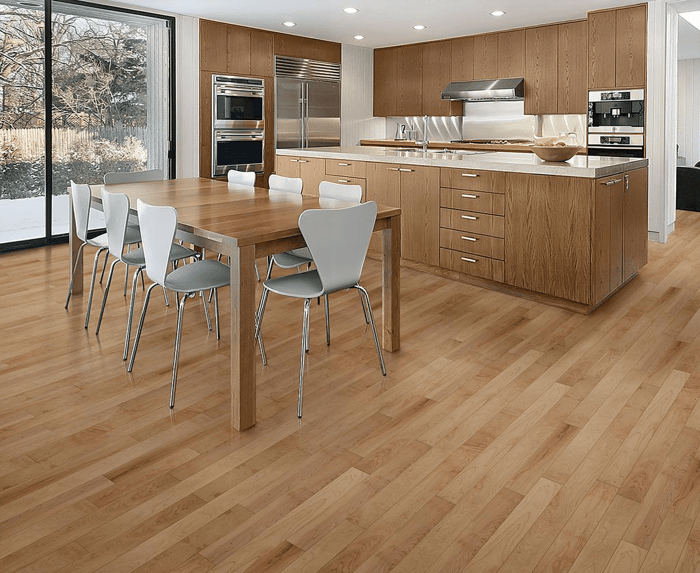
Shop Hardwood Floors Equally important is the tactile experience. A well-crafted hardwood floor has a distinct presence underfoot. Expert homeowners and designers can always sense a certain density and solidity that creates a unique walking experience. In other words, hardwood absorbs sound rather than amplifying it, lending spaces a softened acoustical quality that feels calm and composed. Over time, it develops into a unique and lived-in look. These components are just a few of the many important variables that influence hardwood flooring costs.
Yet within the category of hardwood itself, there are meaningful distinctions. Most notably between solid hardwood and engineered hardwood. Understanding these differences is essential, not only from a performance standpoint, but from an aesthetic and architectural perspective.
Solid vs Engineered: A Study in Construction & Performance
Solid hardwood
Revered as the pinnacle of luxury. It embodies a singular purity of form where each plank is meticulously crafted from one continuous piece of timber. Typically, uninterrupted from surface to core. Most designs come without any laminations, bonded layers, or engineered substrates. One of its main accolades is the practice of keeping the overall integrity of the wood itself. The designs you select such as oak, maple, walnut, or hickory becomes the defining narrative, shaping not only durability and tonal depth, but the subtle nuances of grain and movement. A natural variation that lends the floor its iconic characteristics.
When it comes to solid hardwood, there is an enduring confidence in a surface that can be renewed rather than replaced. Unlike layered alternatives, it can be sanded and refinished repeatedly, allowing each generation of wear to be gently erased and reimagined. Subtle scratches and shifts in tone aren’t considered permanent marks but invitations for restoration.
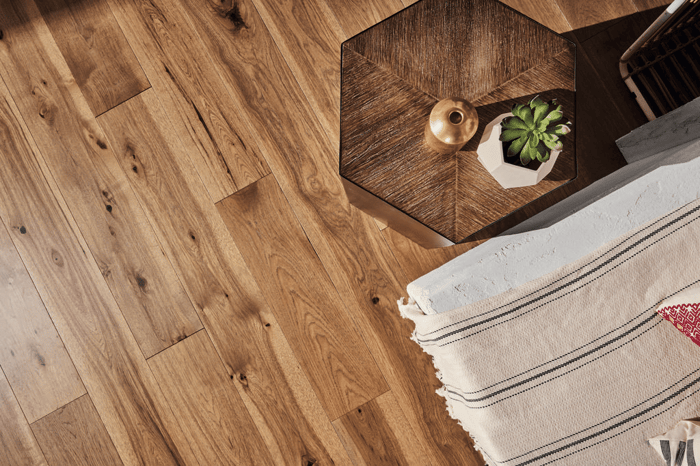
This isn’t to say there aren’t any drawbacks or compromises. That same natural wood composition makes it highly responsive to its surroundings. Changes in moisture and temperature can cause expansion and contraction. This is why solid hardwood is typically best suited for above-grade installations and carefully controlled interiors. Not to be considered a flaw in the design. But rather, it’s the nature of wood. In the right environment, it’s barely noticeable. In the wrong, it can lead to gapping, cupping, or buckling.
Engineered hardwood
By contrast, it represents a more contemporary interpretation of the same enduring aesthetic. This design is composed of a genuine hardwood veneer layered over a dimensionally stable core of plywood or high-density fiber. This stratified design mimics the natural movement of wood, allowing it to perform with greater consistency across a broader range of environments. From basements to concrete subfloors, there’s less sacrifice if it comes down to visual integrity.
In terms of aesthetics, high-quality engineered hardwood is virtually indistinguishable from its solid counterpart. The surface remains entirely authentic with real wood, and all the intricate grain formations and woodsy finishes. The distinction mostly lies beneath, with a structure that’s adaptable when it comes to several conditions. 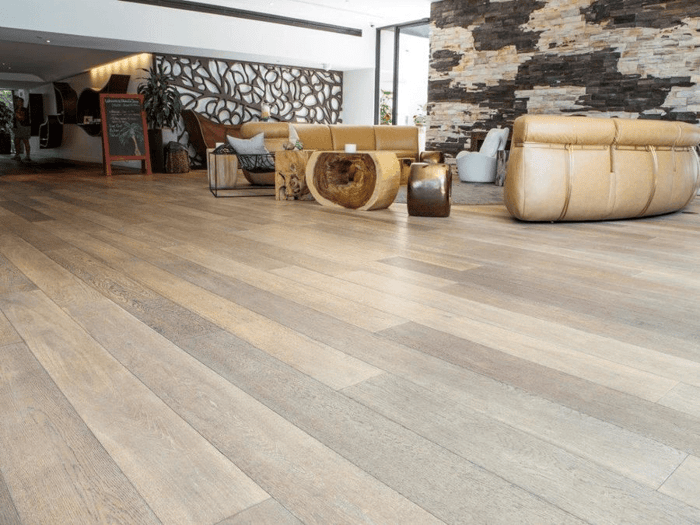 Shop Engineered Hardwood Engineered hardwood does have some measured trade-offs. This design typically permits fewer refinishing cycles, contingent upon the thickness of its veneer. Yet in return, it offers a level of dimensional stability and installation versatility that solid hardwood cannot always achieve. In this way, the choice between the two becomes less about compromise and more about what fits you and your home’s preferences.
Meet The Species: How Aesthetic Influences Hardwood Flooring Costs
The species of wood is often the single greatest driver of cost. Budget-conscious buyers frequently turn to red oak or ash, both of which offer excellent durability and a classic aesthetic at an approachable price point. However, the desired grain and color palette often changes based on what’s trending within that season or year.
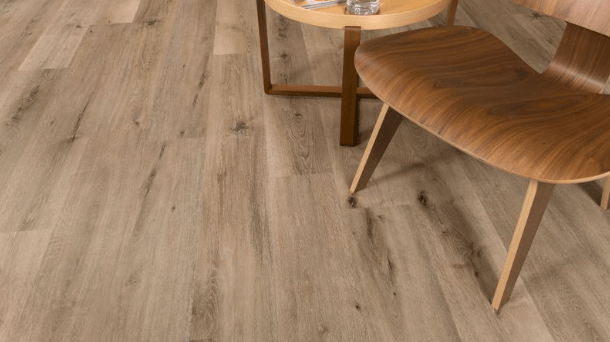
Moving into the mid-range, hickory and maple are renowned for their hardness and distinctive grain patterns. At the higher end of the spectrum, American white oak and walnut have become hallmarks of sophisticated interior design, prized for their rich tones and visual depth. For those seeking something truly exceptional, European white oak represents the pinnacle of the hardwood family. Typically sourced from across the globe, often with provenance and sustainability credentials to match.
Plank Width & Length: The Cost of Going Wide
Wide-plank flooring has emerged as one of the most coveted expressions in residential design—and with compelling reasons. Broader boards introduce a sense of quiet expansiveness, allowing rooms to feel more open and streamlined. Since there are fewer seams, there’s less designs to interrupt the eye. The result is a floor reads as a continuous and uninterrupted surface. A design that embraces a refined visual rhythm for any home space.
This elevated aesthetic comes with inherent considerations. Wider and longer planks typically command a higher price, as they require superior-grade lumber. Natural variations or imperfections that might be concealed within narrower boards become far more apparent at a larger scale, requiring more selective sourcing. The milling process, is notably more precise, calling for professional craftsmanship to ensure each plank remains stable, flat, and aligned.
The result is a floor that feels both architectural and intentional—an investment that scales. This goes for both its material integrity and enduring beauty. For the right space, wide-plank flooring delivers a striking, almost gallery-like presence that is as timeless as it is visually appealing.
Engineered Hardwood: The Importance of Wear Layer
Located at the uppermost stratum of an engineered plank which gives the genuine hardwood surface its appearance, texture, and character. More importantly, it’s the layer your eye sees and your foot meets. This layer literally bears the full weight of daily life which includes foot traffic, furniture, and pets. Its thickness is measured in millimeters, which determines the number of times its surface can be sanded back and refinished over the life of the floor.
A wear layer of 2mm represents the minimum threshold. At this thickness, refinishing is possible in theory, but the margin for error is narrow. The floors may need to be replaced rather than restored. Step up to a 4mm wear layer, and the floor can typically be sanded and refinished two to three times. Each cycle stripping away surface wear, scratches, and discoloration which reveals the fresh and unblemished wood beneath.
A 6mm wear layer extends that potential even further, offering the possibility of four or more refinishing cycles. This means it only requires to be refinished rather than replaced overtime. This represents not only significant savings in costs, but also the avoidance of installation disruption and the embodied value of material that never needs to be discarded. Beyond refreshing your floors, a thicker wear layer has additional structural advantages that compound over time. Greater surface depth provides enhanced resistance to denting, scratching, and micro-abrasions that accumulate in high-traffic areas.
Subfloor Preparation: The Hidden Work Beneath
Hardwood demands a flat, stable, properly prepared surface. Before a single board is laid, a skilled installer will assess the subfloor for dips, humps, raised seams, and any areas of looseness or instability. These issues must be corrected through grinding, patching, shimming, or securing. Skipping this step is one of the most common causes of squeaks, hollow spots, and premature movement on a finished floor. It’s also one of the most significant differences between a low quote and a complete one. When a proposal seems unusually affordable, it is worth asking whether proper subfloor preparation is included.
Moisture Check: The Natural State of Wood
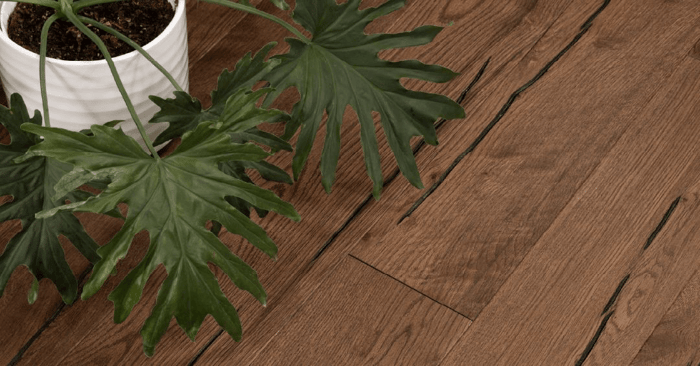
Wood is a living material, and it responds to its environment. This means expanding in humid conditions and contracting in dry ones. A professional installation begins well before the first board is placed. Moisture levels in both the subfloor and the incoming hardwood should be measured and accounted for. The flooring itself must adjust to the conditions of your space so that it can adjust to the ambient temperature and humidity before it is permanently fastened down. At America’s Floor Source, delivery is included to support this acclimation process. Every detail is mutinously inspected, including any minor adjustments. This is a meaningful commitment to the long-term integrity of your floor.
Rushing any step or skipping any details are the key components that separate a flawed installation from an excellent one. As one of the nation’s leading flooring experts, customer experience is essential to our success—and installation is vital to that.
Unforeseen Costs
Unique layouts can add to the overall project cost. Finishing a hardwood floor installation goes beyond laying the planks themselves. It requires a variety of trim and molding pieces to create clean and polished transitions between rooms and flooring types. Reducers, T-molds, stair noses, and quarter round or shoe molding are all commonly needed to cover expansion gaps and bridge different floor heights or materials. Especially when multiple transitions are required across an open layout.
Our Trusted Services
Expert Installation, From Start to Finish
Every project begins and ends in the hands of seasoned professionals. We ensure your hardwood is laid with care and commitment to lasting results. The craftsmanship behind each plank placement is what separates a floor that looks good on day one from one that performs beautifully for decades.
Minor Floor Prep
Every subfloor is unique, and that’s exactly why minor floor prep is part of the process. Before a single plank is installed, the team addresses small imperfections, uneven spots, and surface irregularities that could compromise the finished look or long-term stability.
Seamless Transitions Between Every Space
Coordinating transitions are included to create smooth and cohesive connections between rooms, flooring types, and elevation changes. These finishing elements are carefully selected to complement your new hardwood, ensuring a polished and intentional look throughout your home.
New Quarter Round & Shoe Mold
The space between your floor and the baseboard is where lesser installations fall short. Fresh quarter round and shoe molding are installed with every project. Crisp, clean trim pieces that conceal gaps, protect edges, and give your new floor a truly finished appearance.
Delivery and Acclimation
Hardwood is a living material, and it responds to its environment. Allowing the planks to adjust to your home’s specific temperature and humidity levels before installation is important. This patience-driven process prevents warping, buckling, and gapping down the road.
Glue-Assist for Engineered Planks 5” and Wider
Wider engineered planks require a more secure bond. We include glue-assist in our installation which is ideal for five inch or greater planks. This added adhesion minimizes movement, reduces seasonal expansion, and contraction effects. Ultimately to ensure your broader planks stay flat and firm.
Price Transparency
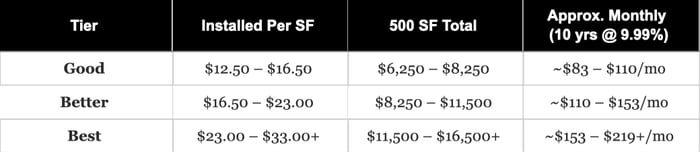
At America’s Floor Source, professionally installed hardwood flooring is typically priced across three tiers. Each reflects not only a different product specification, but a different performance expectation—from everyday durability to premium investments. The chart below illustrates what a 500-square-foot installation might realistically cost across each tier, including both materials and professional installation. These figures provide a meaningful baseline for project planning.
Solid Hardwood
 Engineered Hardwood
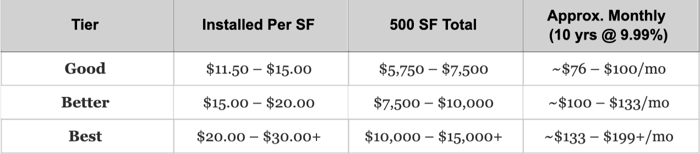
*Note: All solid and engineered hardwood pricing figures are presented as ballpark estimates. Every home requires a unique layout. Preparation requirements, demolition scope, and product selection all influence the final investment. Monthly payment examples reflect our standard 10-year financing program at 9.99%. Precise laminate pricing is available only following an in-home consultation.
Choose Our Most Iconic Hardwood Floors Today
Your floors deserve more than a guess. The right flooring choice is deeply personal. Shaped by how you live, what you love, and the unique demands of your home. That's why our expert flooring consultants will guide you through the details that truly matter such as material composition, durability ratings, waterproof performance, and long-term value. When you schedule a private design consultation, you're not just picking a floor—you're making a decision you'll feel confident about for decades to come.

Sign Up Now And we make it effortlessly easy. Our Mobile Floor Source brings a beautifully curated collection directly to your door, so you can see every finish, texture, and tone in your own light, your own space—with a dedicated personal flooring advisor right beside you. It's the kind of hands-on, unhurried experience that turns an overwhelming decision into an exciting one.
FAQs
Is solid or engineered better?
Both are excellent. The better choice depends on your home. Solid hardwood is ideal when you want a classic, refinishable floor. Engineered hardwood is often better over concrete, in homes with wider temperature or humidity swings.
What affects installation cost the most?
Subfloor flatness, moisture readiness, and installation methods (nail-down, glue-down, or floating) are usually the biggest drivers. Stairs, complex layouts, and the need for glue-assist on wide engineered boards can add to labor and materials.
Does hardwood need to adjust to your home temperature?
Yes. Because hardwood responds to humidity, it needs time on-site before installation. Acclimation helps reduce long-term issues like cupping, gapping, or movement.
Can hardwood be refinished?
Solid hardwood can typically be refinished multiple times over its life. Engineered hardwood can often be refinished once or twice, depending on the thickness of the wear layer.
What should I check for in a hardwood estimate?
Make sure the estimate clearly lists species, grade, width, finish, installation method, transitions, moisture testing, demo, subfloor prep, and what’s included in the warranty. This makes it much easier to compare one quote to another.