Table of Contents
Quick Take
The best flooring for kitchens depends on how you live. Luxury vinyl offers water-ready performance and comfort underfoot, laminate gives hardwood style at a lower price, and tile brings timeless durability. Tile delivers timeless durability. Solid hardwood brings classic warmth (with extra care), and engineered hardwood strikes a balance between beauty and practicality. In 2025, wide planks, stone visuals, matte finishes, and sustainable materials are defining kitchen design.
Why Choosing Kitchen Flooring Feels Tricky
No room gets tested like the kitchen. Between morning coffee spills, kids running for snacks, and chairs scraping back and forth, it’s where floors work the hardest.
If you’ve researched online, you’ve probably seen every expert claim a different “best.” Some say tiles are the only way to go. Others swear by luxury vinyl. And hardwood? Still beautiful — but tricky when water is part of the daily routine.
Let’s cut through the noise and help you find the best flooring for kitchens based on your lifestyle, home design, and daily routine.
What to Consider Before You Choose
When comparing the best flooring for kitchens, consider these factors before making your decision:
- Comfort: If you cook a lot, consider what’s going to feel best under your feet as you cook dinner and prep school lunches.
- Style: 2025 kitchens lean toward matte finishes, and natural texture.
- Resale Appeal: Hardwood and tile are timeless.
- Cost: Vinyl and laminate are most budget-friendly; hardwood and tile sit higher.
- Durability: Can it handle traffic, chairs, pets, and the occasional dropped pan?
- Moisture Resistance: Kitchens mean spills and splashes — how tolerant is it?
- Maintenance: Some wipe clean easily; others need grout care or refinishing.
Luxury Vinyl
Luxury vinyl has become a top pick in the best flooring for kitchens conversation — waterproof, quiet, and easy to clean.
Picture wiping up a splash of tomato sauce without worrying about staining or swelling. Each plank is waterproof; just don’t let puddles linger at the seams where water can sneak underneath.
Why homeowners love it: It’s softer underfoot than tile, easy on your joints, and quieter during the dinner rush. The design range is huge — from warm oak looks to cool concrete tones.
2025 trend watch: Wide, matte planks with subtle texture that flow seamlessly into living areas — creating an open, connected feel.
See our waterproof vinyl flooring options to explore styles that fit your kitchen’s look.
Laminate
Laminate is the style-savvy hardwood alternative that’s more durable than it used to be — and the designs are beautiful, almost indistinguishable from hardwood. Picture a kitchen where the family gathers nightly for dinner prep. Chairs slide, kids run in for snacks, and the floor still looks good; thanks to laminate’s tough wear layer.
The water story: Traditional laminate swells if moisture seeps through seams. Newer versions like Mohawk RevWood or Mannington Restoration resist standing water for 24–72 hours.
Best fit: Homeowners who want hardwood style at a lower price and can manage quick cleanup.
2025 trend watch: Eco-conscious, low-VOC laminates are gaining traction as sustainability becomes a top priority in 2025.
Tile (Porcelain & Ceramic)
Tile is the kitchen classic that’s always ready for chaos.
Think boiling pasta water splashing near the stove or melting ice after a fridge run — tile shrugs it off without blinking. It’s nearly unmatched for durability and longevity.
Trade-offs: It’s cold and hard underfoot — a mat or rug helps if you cook often. While the tile itself can last decades, a dropped pan can still crack one (but don’t worry we have accident protection that can help you replace a cracked tile!)
2025 trend watch:
- Large-format tiles with minimal grout lines.
- Natural stone looks like slate, travertine, and marble.
- Bold statement designs— colorful geometrics and encaustic-inspired patterns that turn the floor into art.
Solid Hardwood
Few materials warm a kitchen like real hardwood. It’s timeless, natural, and instantly elevates a home.
Pros: Can be refinished many times and adds top-tier resale value.
Cons: Moisture is its weakness — even small leaks can cause warping or staining. You’ll also see more scratches unless protected with rugs or pads.
2025 trend watch: White oak in matte finishes and neutral tones that make kitchens bright, cozy, and timeless all at once.
Engineered Hardwood
Engineered hardwood gives you the same genuine wood surface, but with better dimensional stability for kitchens.
Its layered core handles humidity and seasonal changes more gracefully, and many modern versions have sealed edges for extra spill protection.
Where it shines: Looks identical to solid hardwood but performs better against everyday moisture.
Where it falls short: Still not waterproof — and refinishing is limited to once or twice.
2025 trend watch: Wide, matte planks.
2025 Kitchen Flooring Trends
Kitchens in 2025 mix durability with design character:
- Wide planks: Open up spaces, especially in vinyl, laminate, and engineered wood.
- Stone & Stone-look tile: Earthy, natural textures dominate.
- Matte finishes: Lower sheen, more natural realism.
- Patterned tile: From checkerboard to bold geometrics.
- Warm neutrals: Taupe and natural tones, replace greige and cooler grays.
- Sustainability: Look for FSC-certified hardwoods, GreenGuard Gold and FloorScore (r) certifications.
- Technology: Waterproof laminates and water-tolerant engineered wood finishes.
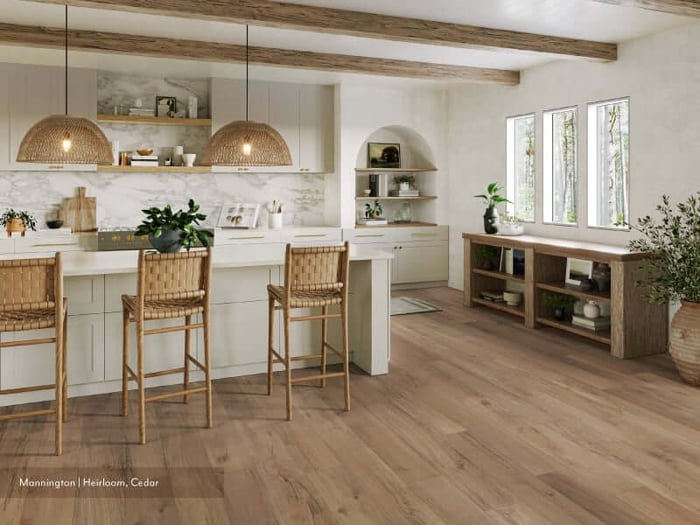
Design tip: Pair white cabinets with warm wood floors for a timeless kitchen or contrast dark tile with quartz counters for a modern edge.
How They Handle Water — and Warranties
Water resistance isn’t invincibility. Here’s what most manufacturer warranties actually cover:
- Vinyl: Everyday spills, yes. Standing water for days, no.
- Laminate: Only short-term spill protection (24–72 hours). Long exposure voids coverage.
- Hardwood: Finish warranties exclude prolonged moisture.
- Tile: Tile itself is covered, but grout maintenance falls to the homeowner.
- Major leaks: Usually handled by homeowners' insurance, not flooring warranties.
Bottom line: Water resistance buys you time, not immunity. Fast cleanup is always your best protection.
Cost Comparison
Feature | Luxury Vinyl | Laminate | Tile | Solid Hardwood | Engineered Hardwood |
Durability | Excellent | Excellent | Excellent | Fair–Good | Good |
Moisture Resistance | Excellent (edges still vulnerable) | Excellent (edges still vulnerable) | Excellent | Poor | Better than solid |
Comfort | Softer, quieter | Firm, slightly hollow sound | Cold, hard | Warm, firm | Warm, firm |
Style Variety | Huge range | Strong wood visuals | Endless (stone, pattern, color) | Classic | Classic |
Resale Appeal | Moderate | Moderate | Strong | Strong | Strong |
Cost Range | Budget - Mid | Budget - Mid | Premium | High -Premium | Mid–High |
Which Floor Is Right for Your Kitchen?
Choosing the best flooring for kitchens in 2025 comes down to how you live. Luxury vinyl is the most forgiving, laminate brings design on a budget, tile lasts forever, solid hardwood adds timeless charm, and engineered wood bridges warmth with practicality.
The best way to decide? See them side by side, touch the textures, and imagine how your family moves through the space.
Ready for your dream kitchen? Schedule a free design consultation and we can help you build your dream kitchen. If you’d like to browse all our options, visit a showroom today and our team can assist in helping to compare and select the best flooring for your kitchen.
FAQs
What is the hardest-wearing kitchen floor?
Tile, hands down. It resists scratches, heat, and heavy use better than any other material. The only trade-off is comfort — add mats where you stand most.
What’s the most timeless option?
Hardwood and stone tile have centuries of history behind them. Both age beautifully and stay in demand for resale.Hardwood and stone tile have centuries of history behind them. Both age beautifully and stay in demand for resale.
Should I use laminate or vinyl in the kitchen?
Vinyl is better for water protection and comfort. Laminate offers stronger scratch and fade resistance. If you cook a lot or have kids, vinyl tends to hold up longer.
How long does kitchen flooring last?
Material | Typical Lifespan |
Luxury Vinyl | 15–25 years |
Laminate | 15–20 years (water-resistant up to 25) |
Tile | 30–50+ years |
Solid Hardwood | 25–50 years (with refinishing) |
Engineered Hardwood | 20–30 years |
Does kitchen flooring fade in sunlight?
Tile is the most fade-resistant. Laminate follows closely, while vinyl and hardwood can lighten over time in direct sunlight. Window coverings or UV coatings help extend color life.
Which options work best in open layouts?
Luxury vinyl flows well across open kitchens and living spaces. Engineered hardwood also transitions seamlessly.